

Hydraulic Components: Why Leakage and Pressure Resistance Matter
In a hydraulic system, pressure is unforgiving. A valve block that fails, a leaky connection, a body that deforms under load: in hydraulics, a defect that elsewhere would be merely an aesthetic issue becomes a risk to the safety and functionality of the entire system. Designing hydraulic components therefore means starting from a non-negotiable constraint: leakage and mechanical resistance must be guaranteed under all operating conditions.
The Role of Aluminum in Hydraulic Systems
Different materials coexist in hydraulic circuits, chosen based on the role of each component: where maximum pressure resistance or compatibility with particularly corrosive environments is required, specific steels and alloys are often used, while aluminum has carved out a significant niche wherever weight reduction is a key factor—for example, in valve bodies, housings, and support structures—without sacrificing good mechanical resistance and corrosion resistance.
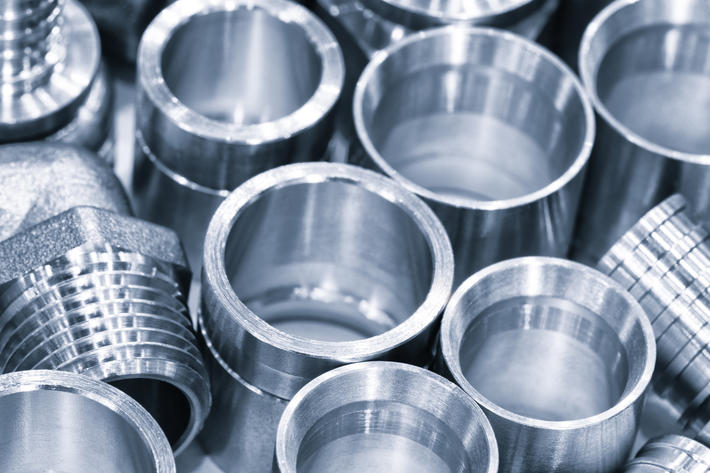
Aluminum fittings for connecting pipes and hydraulic lines also benefit from this combination: low weight, good workability, and long-term reliability, provided the material and alloy chosen are compatible with the operating pressure and fluid used in the system.
Why Die Casting Is Convenient for Hydraulic Components
When a hydraulic component has a complex internal geometry—passageways, valve seats, multiple mounting points—producing it by chip removal from a solid block means starting with a lot of excess material and long machining times. Die casting approaches the problem differently: the part is already close to its final shape, with the internal passages cast directly into the mold and surfaces that require only targeted machining at critical points (seal seats, threads, mating surfaces).
This approach brings with it some typical advantages of die casting applied to hydraulics:
- Lower material consumption compared to machining from solid bar stock or solid block;
- Reduced post-machining times, limited to areas requiring tight tolerances;
- Ability to integrate multiple functions (valve seats, mounting points, internal channels) into a single casting, reducing the number of components to be assembled;
- High repeatability on large volumes, with limited dimensional deviations between parts in the series.
It is understood that the choice between die casting and solid machining depends on the production volume, geometric complexity, and pressure requirements of the component: for prototypes or very small series, solid machining may remain the most suitable solution.
What Can't Be Derogated: Sealing, Inspection, Traceability
In hydraulics, a component is never "good enough": it must withstand operating pressure with adequate safety margins, guarantee long-term sealing—through well-designed O-ring seats, gaskets, or sealing cones—and maintain its characteristics even in harsh environmental conditions. For this reason, every critical component requires thorough dimensional checks, leak testing, and, when required by the application, pressure testing to confirm the part's conformity before installation.
A production process that starts with the design
A production process that starts with the design
Achieving these guarantees isn't just a matter of material or process: it depends on how the component is designed from the start, together with the manufacturer. Choosing the right alloy, defining the thicknesses and internal geometries for die-casting, and planning the subsequent mechanical processes are steps that are best decided jointly by the customer and supplier, rather than in separate and unrelated phases.
This is the approach that underpins Italpres's way of working: following the component from the initial co-design, maintaining control of the entire production process without handovers between different suppliers.
Do you have an aluminum component to develop for a hydraulic or hydraulic system? Let's talk.